Showing posts with label Electronics. Show all posts

Monday, December 7, 2015

Smart Card Reader Market Research and Future Trends 2020

Introduction: 2015 Smart Card Reader Industry Report – Global and Chinese Market
Smart Card Reader Industry Report - Global and Chinese Market Scenario provide a detailed business insight on the trends of Global and Chinese market. The report initially focuses on the existing technologies being used in the production of Smart Card Reader, the evolution of the Smart Card Reader industry and the current situation of the industry in Global and Chinese market. This section primarily offers an introduction to the industry containing the basic classification of Smart Card Reader, the past and the recent situation of the industry and the latest ongoing in the market.
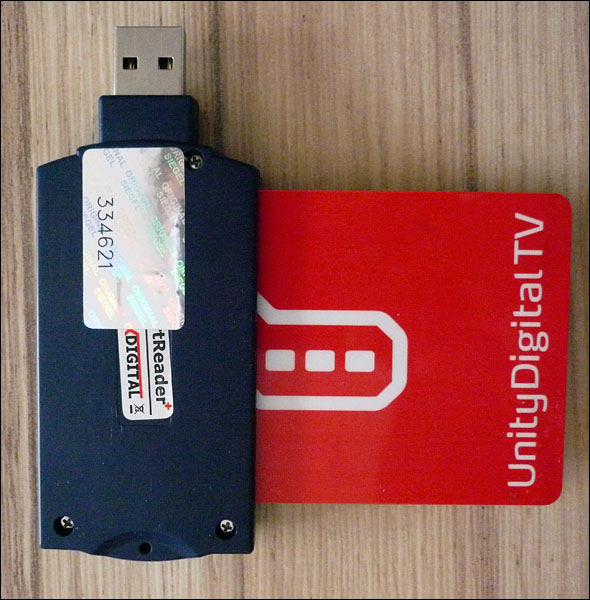
Smart Card Reader

Manufacturing Technology of Smart Card Reader
In this section the report elaborates the latest and the most efficient technologies currently being used by the top manufactures of the industry. This section further emphases on the complete market analysis on the existent technologies and provides an up-to-date overview of the current competitive technologies and the best fit for various business ventures.  The next segment has a detailed study of the market trends and the manufacturing techniques that were followed by the leading players of the industry to grab the lead.

Existent Competitors: Study of companies including Company Profile, Product Specification, and 2010-2015 Production Information etc.)/Global and Chinese Market Analysis
The prior section comprises of detailed study of ten different companies with their complete company profile, their product specification and the production status from 2010-2015. This section helps to learn the current market competitors, their production strategy and the best practices that were followed by them to attain their top positions. The segment describes the ongoing market trend as per the customer’s behavior, the production status and the consumption figures. From this section one can figure out the consumption and production capacity of the Global as well as the Chinese market.  There is brief comparison of the various aspects of the Global and the Chinese market which states the challenges and the facilities available on entering both market platforms. And the last segment of this section states the vital figures of the import and export of Smart Card Reader by the Chinese industry.


Market Status and Market Forecast of 2015-2020 Global and China Smart Card Reader Industry
Next in the report comes a detailed classification of the market competition classified on the basis of companies, on the basis of countries ( i.e. U.K, U.S, Japan, China and many more), and on the basis of the usage of the Smart Card Reader  according to the various industry’s need. Then, the report focuses on the market forecast of 2015-2020 Global and China Smart Card Reader Industry. There are five segments in the section stating the estimated business forecast from 2015 to 2020. This segment covers Global and China Capacity, Production, and Production Value of Smart Card Reader, Smart Card Reader Industry Cost and Profit Estimation, Global and China Market Share of Smart Card Reader, Global and China Supply and Consumption of Smart Card Reader, China Import and Export of Smart Card Reader. These segments help provide an overview to create effective strategies for the period.

Analysis of Smart Card Reader Industry Chain and Global/China Economic Impact on Smart Card Reader Industry
Here report describes the various arrangements used by the industry giants. This segment analysis the structure and tells the practices to be followed in order to pursue a successful outcome in the Automatic sprinkler Industry. Moving to next the report explores the impact of the Global and Chinese economy on the Smart Card Reader Industry. The three segments of this section includes a complete study of the Global and Chinese economy (in regards to the Smart Card Reader Industry), its short-term and long-term impact on the market, the economic trend of the Global and the Chinese economy and its direct and indirect effects on the business.

Market Dynamics and Policy of Smart Card Reader Industry
This section comprises of updated new and the latest trends in the industry along with the latest ongoing and happenings. This segment covers the challenges to be faced and opportunities to grab for the existent players, as well for the new market penetrators.
 
Proposals for New Project
The last segment is specially written for the new market players and covers an in-depth study by experts to formulate an effective business strategy for successful market decision making, suggestive plans to handle the economic or any business impact. This report also suggests the various business channels that can be helpful for a new market player.

Research Conclusions
Finally, the report concludes with covering almost each and every aspect of the Smart Card Reader Industry and working as an easy hand book for any level of business decision maker for efficient and hassle free path to attain success in Automatic sprinkler Industry.


Monday, November 2, 2015

Gyroscope Industry Trends, Revenue Structure and Business Strategies


Global and Chinese Gyroscope Industry, 2010-2020 Market Research Report, an in-depth market analysis that provides extensive business insight on the global and Chinese Gyroscope industry. The broad and comprehensive sections of the report, targets to make-available a strong business understanding to the user; streamlining an effective decision making procedure. This report is a combined analysis of primary and secondary informative inputs provided by the existing players of the Gyroscope industry.  

Global and Chinese Gyroscope Industry, 2010-2020 Market Research Report provides a detailed explanation of the vivid market scenarios, strengthening the decision making machinery associated with the industry at different levels. The report begins with an introduction to the Gyroscope industry, explaining the industry terminology and the development of the industry over time.  Then, the report explores the manufacturing technologies that are being followed by the existing industry manufactures, also highlighting the development introduced in the manufacturing technologies over time.  The next section of the report, analyses the key-manufacturers of the flotation industry under sub-sections like: company profile, product Information, production information and contact information of the respective company.

The following sections of the report review the global and the Chinese market of the Gyroscope by analyzing the production value of the Gyroscope industry, cost and profit of the industry in the review period, global and Chinese market comparison, and import and export of the Gyroscope in the Chinese market. Further, the report has segmented the competition prevalent in the Gyroscope industry on the basis of companies in the business and on the basis of key business countries (USA, EU, Japan, Chinese etc.). Based on the various key-findings of the industry, a business forecast is drafted in the report that shares the growth prospects of the industry, over the forecast period 2015-2020. In the last few sections, the report elaborates the industry aspects like: an analysis of the Gyroscope industry chain, impact of global and Chinese economy on the Gyroscope industry and a description of the different market dynamics of the industry.  The last section of the report is systematically structured to provide an overview for setting-up a new business unit in the Gyroscope industry.

Lastly, the report delivers a conclusion on the overall finding of the research. Global and Chinese Gyroscope Industry, 2010-2020 Market Research Report, methodically highlights each aspect of the Gyroscope industry helping the business professionals in hassle-free decision making.

Major Points from Table of Contents

Chapter One Introduction of Gyroscope Industry
1.1 Brief Introduction of Gyroscope
1.2 Development of Gyroscope Industry
1.3 Status of Gyroscope Industry

Chapter Two Manufacturing Technology of Gyroscope
2.1 Development of Gyroscope Manufacturing Technology
2.2 Analysis of Gyroscope Manufacturing Technology
2.3 Trends of Gyroscope Manufacturing Technology

Chapter Three Analysis of Global Key Manufacturers

Chapter Four 2010-2015 Global and Chinese Market of Gyroscope
4.1 2010-2015 Global Capacity, Production and Production Value of Gyroscope Industry
4.2 2010-2015 Global Cost and Profit of Gyroscope Industry
4.3 Market Comparison of Global and Chinese Gyroscope Industry
4.4 2010-2015 Global and Chinese Supply and Consumption of Gyroscope
4.5 2010-2015 Chinese Import and Export of Gyroscope

Chapter Five Market Status of Gyroscope Industry
5.1 Market Competition of Gyroscope Industry by Company
5.2 Market Competition of Gyroscope Industry by Country (USA, EU, Japan, Chinese etc.)
5.3 Market Analysis of Gyroscope Consumption by Application/Type

Chapter Six 2015-2020 Market Forecast of Global and Chinese Gyroscope Industry
6.1 2015-2020 Global and Chinese Capacity, Production, and Production Value of Gyroscope
6.2 2015-2020 Gyroscope Industry Cost and Profit Estimation
6.3 2015-2020 Global and Chinese Market Share of Gyroscope
6.4 2015-2020 Global and Chinese Supply and Consumption of Gyroscope
6.5 2015-2020 Chinese Import and Export of Gyroscope

Chapter Seven Analysis of Gyroscope Industry Chain
7.1 Industry Chain Structure
7.2 Upstream Raw Materials
7.3 Downstream Industry

Chapter Eight Global and Chinese Economic Impact on Gyroscope Industry
8.1 Global and Chinese Macroeconomic Environment Analysis
8.1.1 Global Macroeconomic Analysis
8.1.2 Chinese Macroeconomic Analysis
8.2 Global and Chinese Macroeconomic Environment Development Trend
8.2.1 Global Macroeconomic Outlook
8.2.2 Chinese Macroeconomic Outlook
8.3 Effects to Gyroscope Industry

Chapter Nine Market Dynamics of Gyroscope Industry
9.1 Gyroscope Industry News
9.2 Gyroscope Industry Development Challenges
9.3 Gyroscope Industry Development Opportunities

Chapter Ten Proposals for New Project
10.1 Market Entry Strategies
10.2 Countermeasures of Economic Impact
10.3 Marketing Channels
10.4 Feasibility Studies of New Project Investment

Wednesday, March 4, 2015

Global & China Rigid PCB Industry Analysis 2015

Global and China Rigid PCB Industry Report, 2014-2015 highlights the followings:
  • PCB industry
  • PCB downstream market
  • Horizontal comparison of PCB companies
  • 35 typical PCB companies
2014 was a good year for majority of PCB companies, as output value of PCB industry touched USD59.6 billion, rising 3.7% against 2013, the fastest growth rate since 2011. Looking forward to 2015, a collapse in prices of commodities, especially in that of copper, will significantly reduce raw materials costs of PCB companies, thus further driving their profit margins.

In 2014, in key regions of PCB manufacturing, euro, NTD, and yen all depreciated sharply, while the won appreciated, dealing a heavy blow to South Korean PCB industry and cutting profit margins of the country’s PCB companies, which all suffered declines in revenue and profit margins, no exception for Samsung’s SEMCO, whose revenue from PCB business glided 2.4%, revenue from IC Carrier business dropped by 19%, and operating margin fell to below 1% from about 9%.

Taiwanese companies and European ones, benefiting from currency devaluation, saw a surge in profit margins, while Japanese peers didn’t gain from yen depreciation, as more than half of their production bases are located in foreign countries, but still performed better than South Korean counterparts.


HDI was still a main engine of growth in rigid PCB field in 2014, and is expected to maintain the momentum in 2015. As mobile phone screens become larger, PCB for mobile phone has to react accordingly. To ensure light weight and thinness of mobile phone, the demand for more advanced Anylayer HDI increases tremendously. As Anylayer HDI technology is time- and -capacity consuming, combined with Panasonic’s withdrawal from Anylayer HDI field, various PCB companies will expand Anylayer HDI capacity in 2015. In 2014, the company registered largest growth in revenue from HDI PCB business was Taiwanese Compeq, which boasts customers like Apple and Xiaomi with impressive performance, jumping by 28.3% to USD690 million, one step away from industry leader Unimicron.

Another spotlight in 2014 was PCB for server. With further penetration of internet economy, the coming of big data era, and influx of large amounts of capital into network economy, the demand for server ushers in explosive growth. PCB for server requires high Tg and low Loss, with layer growing more higher, up to 28, driving continuous increase in unit price of PCB for server since 2009. The companies that specialize in PCB for server, such as Taiwanese WUS Printed Circuit and ACCL, accomplished good results, with WUS Printed Circuit’s revenue ascending by 20% and ACCL’s 27%.


Regarding rigid PCB, LED lighting stimulated demand for metal PCB with good heat elimination performance. Taiwanese T.P.T, GIA TZOONG, and mainland Chinese Shenzhen Kinwong Electronic, which are skilled in metal PCB, all enjoyed a decent level of growth. In addition, PCB for automobile also did a good performance.

The most sensational event in PCB industry in 2014 was the merger of TTM and Viasystems. The combined company is absolutely No. 1 manufacturer with total revenue approximating USD2.5 billion. TTM enjoys a strong position in cellular phone and networking/telecom, and Viasystems in automotive and industrial fields, showing a perfect complementation.


Major Points from Table of Contents

1. Overview of PCB Industry
1.1 Output Value of Global PCB Industry
1.2 Recent Developments and Future Trends of PCB Industry
1.3 PCB Industry in Taiwan
1.4 PCB Industry in Mainland China
1.4.1 Industrial Scale
1.4.2 Policy
1.5 Ranking of Chinese Mainland PCB Vendors
1.6 PCB Industry in Europe
1.7 PCB Industry in North America
1.8 PCB Industry in Japan

2. PCB Downstream Market
2.1 Global Mobile Phone Market
2.2 Global Smartphone Market
2.3 Chinese Mobile Phone Market
2.4 Tablet PC Market
2.5 Laptop Computer Market

3. Analysis of PCB Industry
3.1 PCB Technology Trends
3.1.1 Ranking of PCB Companies for Mobile Phone
3.1.2 Supporting Relationship of Mobile Phone PCB
3.2 Memory Module PCB
3.3 Rigid PCB
3.4 PCB for Automotive Electronics
3.5 PCB for Laptop Computer
3.6 Ranking of Global PCB Companies


4. Major PCB Companies
4.1 Unimicron
4.2 Compeq
4.3 HannStar Board
4.4 Gold Circuit Electronics
4.5 Tripod Technology
4.6 Meiko
4.7 CMK
4.8 IBIDEN
4.9 Daeduck Electronics
4.10 TTM
4.11 Unitech PCB
4.12 AT&S
4.13 Kingboard
4.14 SIMMTECH
4.15 T.P.T
4.16 Ellington Electronics
4.17 Chinpoon Industrial
4.18 LG INNOTEK
4.19 SEMCO
4.20 Founder PCB
4.21 Gul Technologies
4.22 Dynamic Electronics
4.23 Viasystems
4.24 Nanya PCB
4.25 Shennan Circuit
4.26 WUS Printed Circuit
4.27 Guangdong Goworld
4.28 ZDT
4.29 Multek
4.30 Kinsus
4.31 Shinko
4.32 ISU PETASYS
4.33 KYOCERA CIRCUIT SOLUTIONS
4.34 Shenzhen Kinwong Electronic
4.35 Allied Circuit


Email:                   sales@chinamarketresearchreports.com
Website:             http://www.chinamarketresearchreports.com/

Press Release: http://www.prnewswire.com/news/china+market+research+reports

Tuesday, December 2, 2014

Chinese Uninterruptible Power System Industry (UPS) Report, 2014-2017


An uninterruptible power system (UPS) is a power electronic apparatus that has energy storage equipment, consists mainly of inverter, rectifier and battery pack, and provides safe, stable and uninterrupted electric energy to load equipment.

As indispensable infrastructure for world’s economic development, UPS is finding expanded application scope along with ever-accelerating informatization. Global UPS market sales for 2014 is estimated to reach USD 6.3 billion, up 3.3% year on year, and the figure in China will rise by 6.7% from a year earlier to USD 660 million (based on 1 USD=6.1 yuan). Burgeoning industries like big data, smart city, Internet of Things, 4G and rail transit will become new growth engines of UPS market. It is expected that the Chinese UPS market sales will exceed USD 820 million by 2017.

The downstream of the Chinese UPS market is concentrated in fields of finance, telecommunications, government, manufacturing and transportation, etc, which together account for about 80% of the Chinese UPS market revenue. High-power (>10kVA) UPS are high-end products in the industry, which made up only 20% of total sales volume but 85% of total sales value in China in 2013. As the construction of large big data centers progresses and high-power UPS products become more profitable, the Chinese high-power UPS market will maintain a fairly high growth rate in the future.


At present, nearly all worlds’ well-known UPS brands have entered the Chinese market. In 2013, Eaton, Schneider Electric and Emerson were the top three players in terms of UPS sales in China and occupied a combined 55% market share. Being the first echelon in the Chinese UPS market, the three companies focus on high-power high-end UPS products.

Local companies, represented by Xiamen Kehua Hengsheng Co., Ltd., Shenzhen Kstar Science & Technology Co., Ltd. and Guangdong East Power Co., Ltd, form the second echelon, of which Xiamen Kehua Hengsheng holds the highest market share, coming to 12% in 2013 and ranking the third in the Chinese high-power UPS market in 2013 with a market share of 20%, after Emerson and Schneider Electric.


Table of Contents

1. Overview of UPS
1.1 Definition and Classification
1.2 Application
1.3 Industry Chain
1.4 Development Trend

2. Development of China UPS Industry
2.1 Development Course
2.2 Policy Environment
2.3 Industry Barrier
2.4 Market Size
2.4.1 Global
2.4.2 China
2.5 Import & Export
2.6 Competitive Landscape
2.7 Summary
 

Sunday, November 23, 2014

TFT-LCD Industry for Global and Chinese Market Research Report 2014-2015


The TFT-LCD industry touched the bottom in 2011, then has warmed up slowly since 2012 and is expected to reach its peak in early 2015, but it will fall into another lengthy decline stage by 2016. After the TFT-LCD industry slumped, TFT-LCD vendors in different countries chose varying countermeasures. South Korean vendors represented by Samsung strived to explore the OLED field. In Japan, Sharp transferred to be a small and medium-sized panel vendor, produced mobile phone panels with 8.5-generation lines and vigorously developed IGZO technology. Hitachi, Sony and Toshiba set up a joint venture —— Japan Display (referred to as JDI) to develop LTPS technology. Taiwanese vendors developed 4K HD technology. Chinese mainland vendors promoted the construction of new production lines at low costs aggressively. As a result, Chinese mainland vendors are the most notable winners, followed by Taiwanese and Japanese counterparts, while Samsung is the biggest loser.

South Korean vendors chose the wrong direction, because the current-based OLED can not replace the voltage-based LCD due to following factors. Firstly, OLED requires LTPS technology, which means its cost is much higher than LCD. Secondly, the resolution of current-based components is difficult to raise, but LCD has huge potentials in terms of resolution. Thirdly, OLED’s quality is not steady for its employment of unstable chemical materials, and its luminous efficiency decays as time goes by, which is another fatal flaw. In the small and medium-sized field, Japanese vendors make advantage of LTPS and IGZO to occupy technical high grounds, and Taiwanese vendors lead the global LCD trend with 4K for the first time.


Samsung shows over-reliance on OLED, and its LCD business has gradually crept down. It not only lags behind INNOLUX under Taiwan’s Hon Hai in shipment, but also will drop behind INNOLUX in terms of revenue in 2014. As for profitability, Samsung gets into trouble as well. Being overly optimistic on the Chinese mainland market, Samsung invested heavily in China’s first foreign-funded 8.5-generation line in Suzhou. However, the production line brought the huge loss of KRW86.6 billion in the first half of 2014. Besides China, Samsung also witnessed loss in its overall LCD business in Q2 2014. Samsung has revealed that it will not launch any new OLED TV, even it may quit the OLED TV field in 2015.

Unlike Japanese and South Korean vendors who represent excess dependence on large customers such as Apple and Samsung, Taiwanese vendors take the initiative to reduce dependence on a single large customer. Therefore, the performance of Taiwanese vendors fluctuates slightly and their operating margin ascends faster, whereas Japanese and South Korean vendors who master first-class technology see falling profit owing to the considerable idle capacity during low seasons but have to give up some small customers in busy seasons.
Currently, the prices of 32 to 42-inch LCD-TV panels have stabilized and tend to rise marginally before the peak season, while the prices of 42 to 65-inch LCD-TV panels follow the downward trend as LG Display and Samsung put two 8.5-generation lines into operation in the first half of 2014. In 2015, CSOT’s second 8.5-generation line, Chongqing BOE’s second 8.5-generation line and CEC-Panda’s first 8.5-generation line will target at the 46 to 65-inch TV market, but the output will not be high in the initial stage, so they will not influence the market significantly. On the whole, China will have five 8.5-generation lines in 2015.

As China enters the aging society increasingly, the economic growth has slowed down. In this case, the TV demand will drop down undoubtedly, and serious oversupply will arise in the second half of 2015, leading to the inevitable price war. High fixed costs and depreciation charges of new production lines will seriously erode the profits of vendors.


Global and China TFT-LCD Industry Report, 2014-2015 contains the following aspects:
·         Introduction to TFT-LCD
·         Research on TFT-LCD upstream industries (glass substrate, backlight module, polarizer, driver IC)
·         Analysis on TFT-LCD market and industry
·         Study on 12 TFT-LCD vendors

Table of Contents

1 Introduction to TFT-LCD
1.1 TFT-LCD Structure
1.2 TFT-LCD Production Process
1.3 LTPS
1.4 Competition Analysis between LGZO and LTPS
1.5 TFT-LCD Cost Structure

2 TFT-LCD Industry Chain
2.1 Introduction to TFT-LCD Glass Substrate
2.2 TFT-LCD Glass Substrate Industry
2.3 Corning
2.4 Dongxu Optoelectronic
2.5 Introduction to Backlight Module
2.6 Backlight Module Cost Structure
2.7 Open-cell and Hinge-Up
2.8 Backlight Module Industry
2.9 Radiant Opto-Electronics
2.10 Coretronic
2.11 LCD Driver IC Market
2.12 LCD Driver IC Industry
2.13 Novatek
2.14 Introduction to Polarizer
2.15 Polarizer Market
2.16 Polarizer Industry

3 LCD Market and Industry
3.1 Global Mobile Phone Market
3.2 Global Smartphone Market
3.3 Chinese Mobile Phone Market
3.4 Tablet PC Market
3.5 Laptop Computer Market
3.6 Desktop PC Market
3.7 HD and UHD Video Equipment
3.8 LCD-TV Market
3.9 LCD-TV Panel Industry
3.10 Status Quo of TFT-LCD Industry
3.11 TFT-LCD Panel Price
3.12 Ranking in TFT-LCD Industry

4 Major TFT-LCD Vendors
4.1 AUO
4.2 Innolux
4.3 LG Display
4.4 CEC Panda LCD Technology
4.5 BOE
4.6 CSOT
4.7 Sharp
4.8 Samsung Display
4.9 CPT
4.10 HannStar Display
4.11 Tianma Microelectronics
4.12 Japan Display

Explore All Market Intelligence Research Reports on Flat Panel Display @ http://www.rnrmarketresearch.com/reports/information-technology-telecommunication/electronics/flat-panel-display .